
Emergency Management

Integrated core programs

Custom-built Emergency Management programs

Get Ready’s programs are designed to be flexible and scalable. Each component can be used on its own or integrated into a fully customized solution that is relevant, effective, and aligned with the organization’s goals.
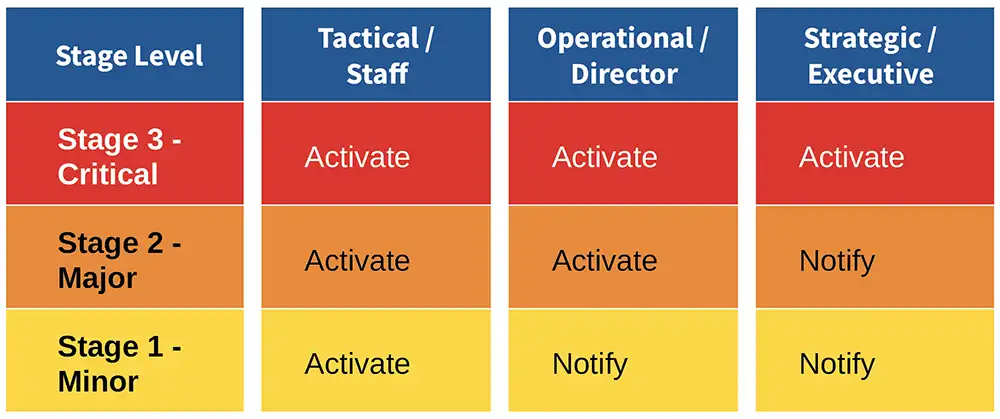
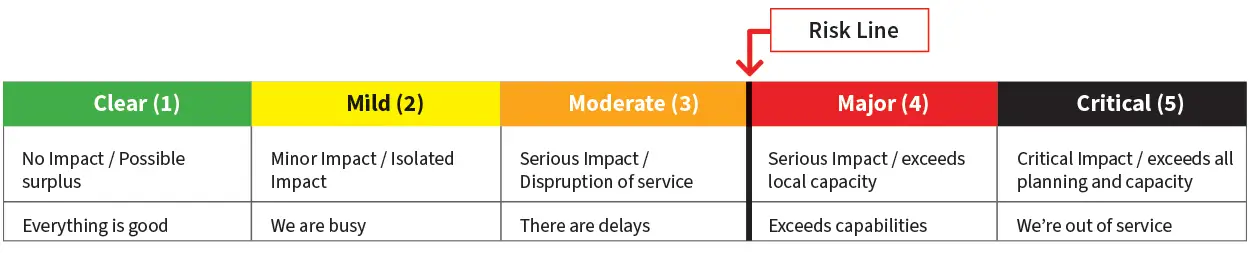
img-Incident-Escalation-Matrix

When an incident occurs, everyone either gets notified or activated, as the incident escalates to a higher stage more people need to take an active role. By having established stage levels, it is pre-determined who gets activated or notified at each level.

Emergency Code Stage Escalation

Stage 1 – Minor: A response with on-site resources

Stage 2 – Major: Additional off-site resources required, like vendors or 9-1-1 Emergency Services

Stage 3 – Multi-Site: large scale incident effecting a region or zone.

Click image to zoom

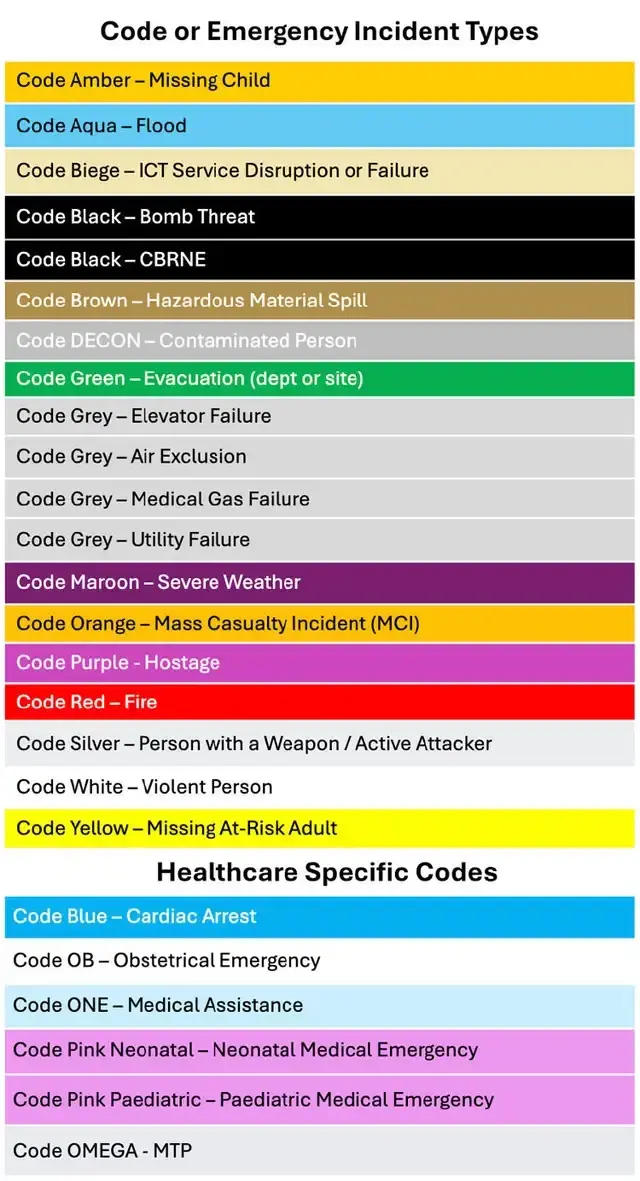
Incident or Code Types
Customized Codes are based on Hazard Identification and Risk Assessment, best practices, and client needs.

Click image to zoom

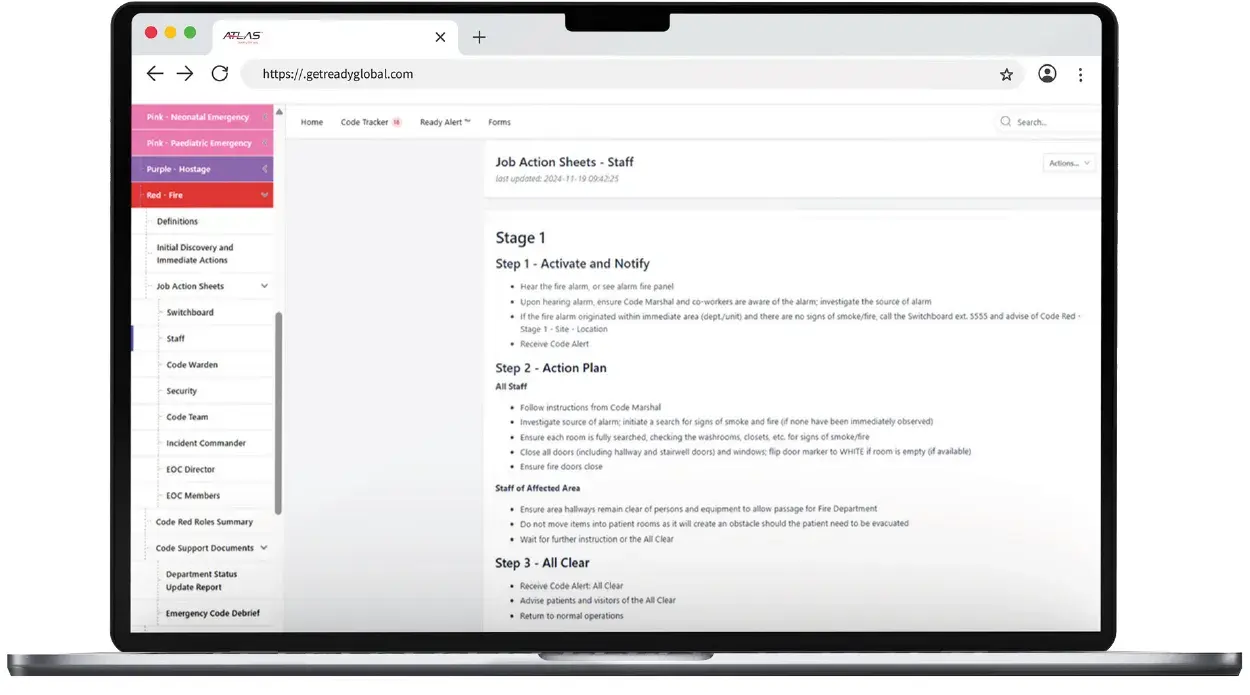
During an emergency people often ask, “what am I supposed to do?” We answer that question!

We develop clear specific role-based Job Action Sheets (JAS) or checklists for all levels of staff and incident types for Stage 1 – Minor, and Stage 2 -Major escalations as appropriate.

Click image to zoom

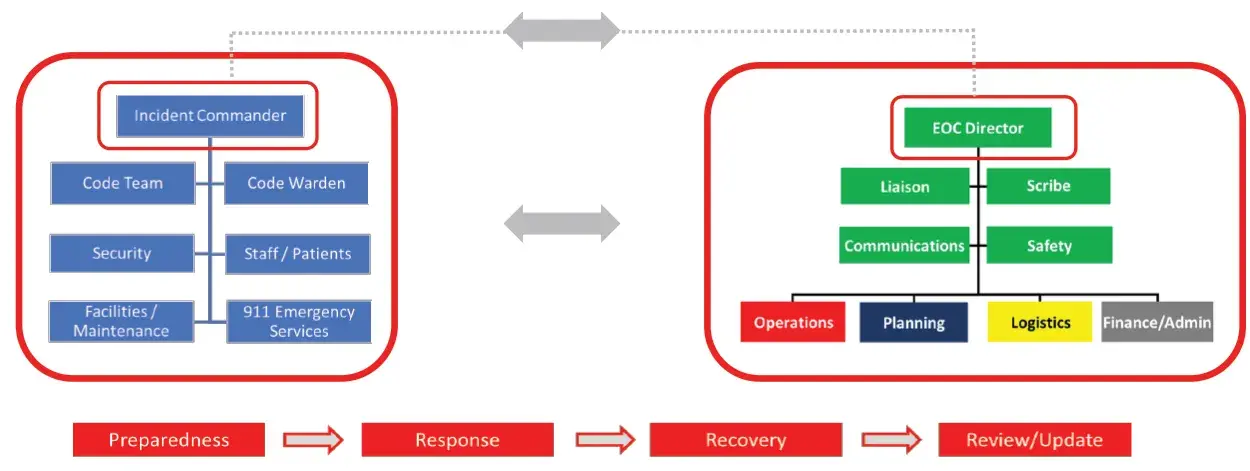
Our Emergency Operations Centre (EOC) program is structured around the Incident Management System (IMS) and the Incident Command System (ICS), ensuring your organization and senior leadership are fully aligned with the jurisdictional requirements of community emergency services, government agencies.

We deliver IMS/ICS role-based Job Action Sheets, compliance-driven digital forms, and comprehensive After-Action Reports. All content is meticulously developed to address tactical, operational, and strategic levels throughout the response and recovery phases.

Click image to zoom

Get Ready facilitates table-top exercises to ensure the Emergency Response Plans are accurate and operational, while maintaining Leadership’s confidence and competence in their emergency roles.

Advanced Emergency Alerting and Action!

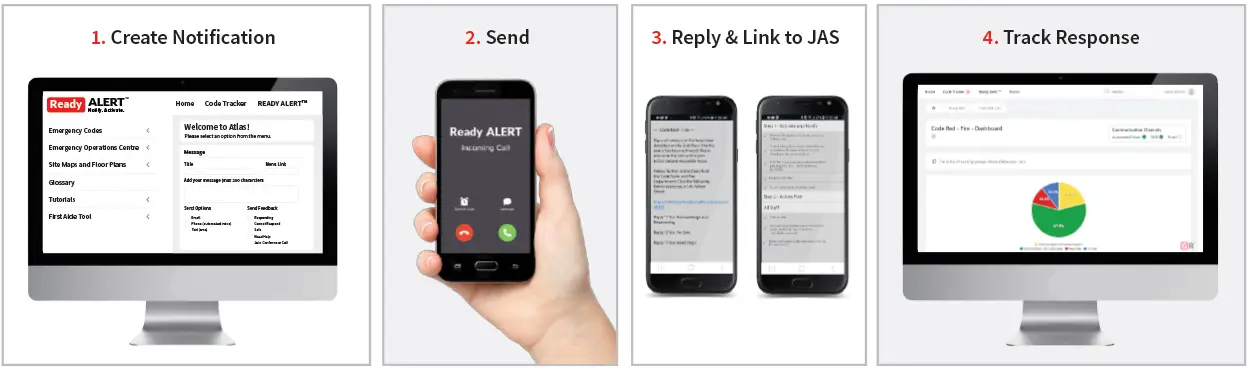
As a partner of the National Research Council of Canada, Get Ready has developed the only notification tool in Canada to send alerts, receive status updates, AND link people to their Job Action Sheets.

It’s not enough just to send an Alert of an incident, it’s critical to tell staff what they need to do as well – We do that!!

Click image to zoom

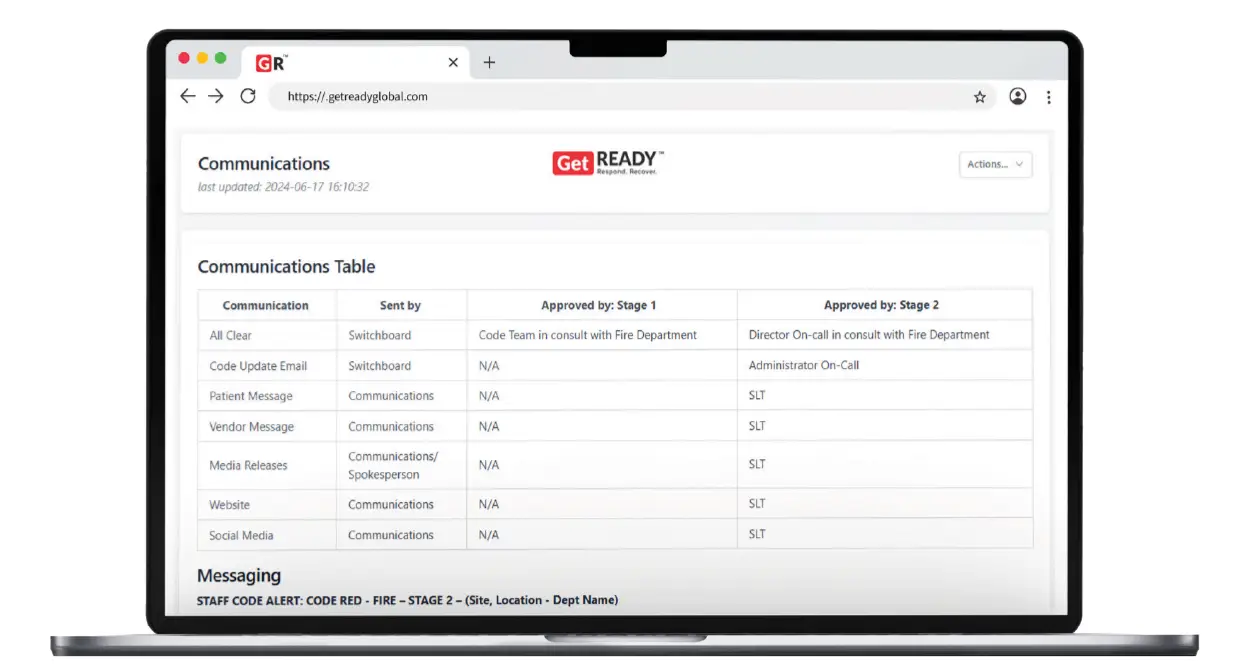
Our team of experts has developed a comprehensive library of pre-drafted, incident-specific crisis communications for both internal and external stakeholders. This includes memos and social media posts, all prepared for your review and approval.

With these resources, senior leadership can communicate with confidence, ensuring timely and effective messaging during critical incidents.

Click image to zoom

Achieve immediate real-time situational awareness.

Enable effective and informed decision-making by the Leadership Team.

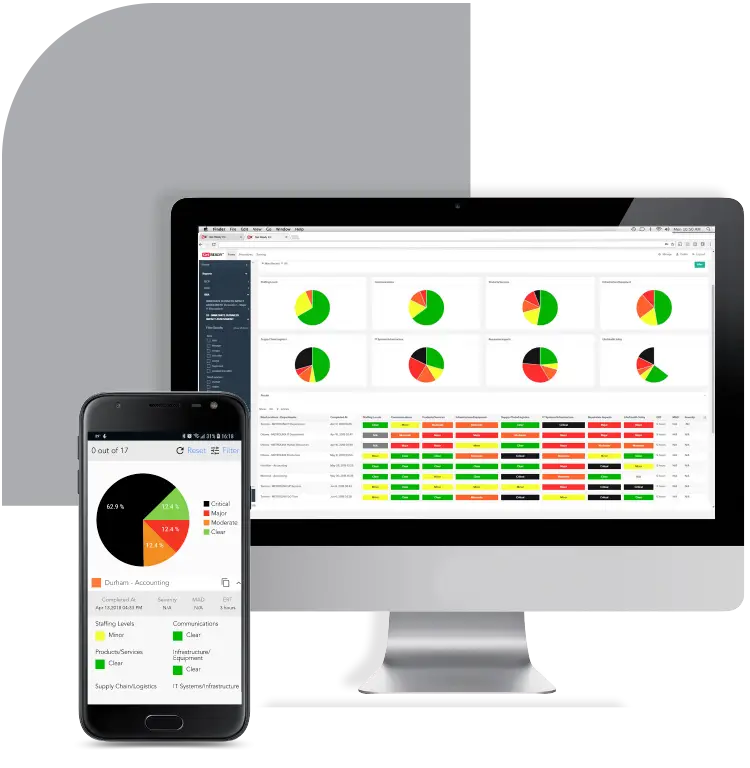
In alignment with Business Continuity Institute (BCI) standards, we develop comprehensive strategic plans through Business Impact Analysis (BIA) and Maximum Allowable Downtime (MAD) assessments. Our services include the provision of eight strategic critical priority digital forms and custom dashboards, supporting both regularly scheduled and incident-driven Immediate Business Impact Analysis (IBIA).

Our digital forms are designed for efficiency, featuring quick completion and integrated version control to streamline ongoing program maintenance. This approach significantly reduces the administrative burden for managers and directors, saving valuable time and resources.

Senior leadership benefits from real-time status reports, ensuring access to the most current and relevant information at all times. Once a decision or directive is established, the organization is equipped with a clear, actionable path forward, supported by pre-approved Alternate Strategies tailored for Supervisors and Managers (Tactical), Directors (Operational), and Senior Leadership (Strategic).

Click image to zoom

Digital Forms for Rapid Reporting

Drawing on extensive experience responding to and managing thousands of incidents, our team has developed highly user-friendly, customizable digital forms. These forms are designed to enable managers, Incident Commanders, and EOC members to complete incident and post-incident documentation quickly and efficiently, significantly reducing time and frustration.

With instant sharing capabilities, results can be distributed immediately, ensuring other managers have timely access to essential reports without unnecessary delays.

Save time and effort and get the reports you need!

Many staff and managers find reviewing hand-written documents and compiling summary reports to be a time-consuming and tedious process. With our digital solutions, data from incident debriefs, code trackers, and after-action reports can be accessed instantly at the click of a button. Generating weekly, monthly, quarterly, and annual reports becomes efficient and effortless, allowing your team to focus on higher-value tasks.

Pick the additional program that fit’s your needs

A flexible approach

Our approach to emergency management and resilience is intentionally flexible. We recognize that no two organizations are the same and neither are their needs. That’s why our programs can be tailored in three ways.

1. Build your own program:

By giving clients the freedom to build their own program— selecting only the tools and resources that will make the greatest impact—we empower teams to prepare confidently, respond effectively, and recover quickly. Whether you’re looking for focused training or a full-scale integrated program, Get Ready Global ensures that every component works together to strengthen your overall resilience.

2. Individual modules:

Choose specific tools or training sessions to target an immediate need, whether it’s emergency response, leadership under pressure, or team communication

3. Scalable design:

Start small and expand over time. Our programs grow with your organization, adapting as your priorities shift and challenges evolve. Move from a main site to regional or smaller sites.